Vietnam Influencer Marketing 101: Landscape, Platforms & Legal Guide 2026
Vietnam has turned into one of the most exciting landscapes in Southeast Asia for brands looking to scale through creator partnerships. Young demographics, high smartphone usage, and the boom of social shopping platforms like TikTok Shop mean consumers move from spotting a product to hitting “buy” faster than ever before. Because of this shift, influencer marketing is no longer just a nice-to-have tactic in Vietnam-it has turned into a core driver for how people discover new products and how brands actually move inventory.
On the legal side, though, things haven’t stood still either. Vietnam updated its advertising rules for 2026, and regulators are paying a lot closer attention now to how disclosure works and whether claims are misleading. That means brands can’t just treat influencer deals as a creative call anymore – compliance has to be part of the decision too.
That’s what this article gets into: the market landscape, how consumers actually behave, the platforms worth paying attention to, and the legal requirements you’ll want to have covered before running a campaign in Vietnam.
Vietnam Influencer Marketing Overview
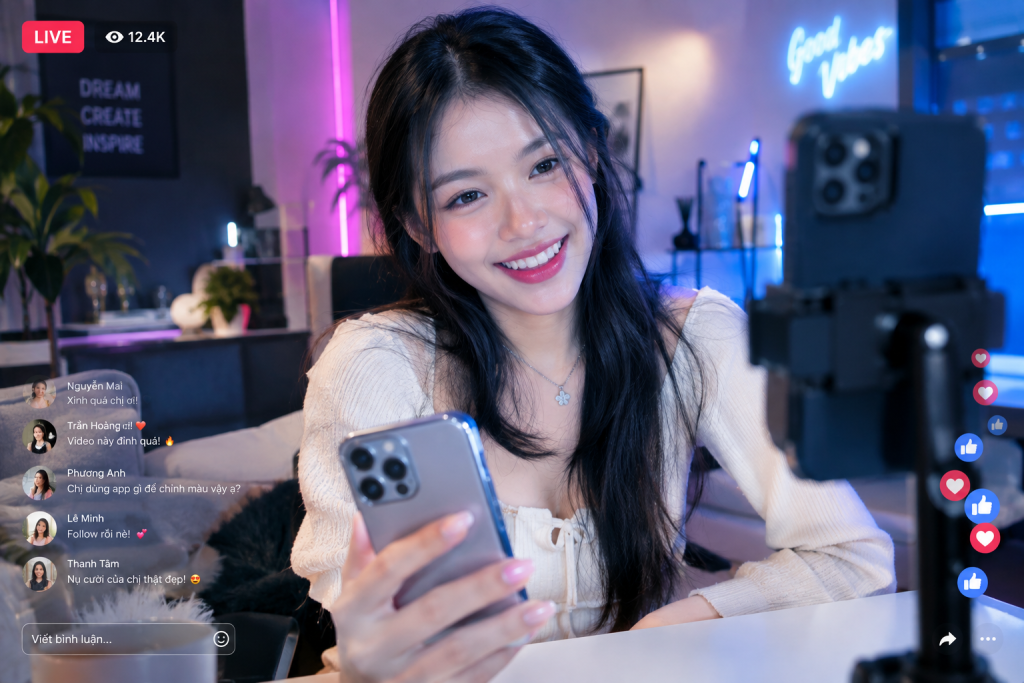
At its core, influencer marketing means brands teaming up with people who have real sway over how a specific group of customers finds, judges, and eventually decides to buy something. These partners can be celebrities, KOLs, KOCs, niche creators, or affiliate sellers.
And it doesn’t stop at a single sponsored post. Depending on the goal, brands might go with short-form videos, product reviews, livestreams, product seeding, affiliate links, or content the creator puts together themselves. For foreign brands especially, local creators bring something that’s hard to fake: they actually understand the culture. That means messaging comes across as naturally local, not just translated from another language.
Vietnam’s Market Landscape
According to DataReportal’s Digital 2026 Vietnam report, Facebook could reach close to 79 million people in the country by late 2025, and about 78.7 million social media users there are 18 or older.
That’s a lot of people to reach, and it’s part of why social platforms matter so much for getting a product noticed and building a brand here. But having a big audience on paper doesn’t mean a campaign will actually work. Brands still have to get the basics right – the right creator, the right content format, on the right platform, talking to the right audience with the right goal in mind.
Consumer Behavior & Key Trends
Vietnamese shoppers are moving through discovery, consideration, and purchase largely on social media now, and a lot of that comes down to the creators they already follow and trust. YouNet’s 2025 e-commerce report has the numbers to prove it: 55% of Gen Z shoppers said they’d checked a micro-influencer’s review before buying something, and 51% said trends going viral on social media were what pushed them to try a new product on e-commerce platforms.
So creators aren’t just doing one job anymore. In a single customer journey, they might introduce a product, walk people through how it works, build up trust, make the case for why it’s worth buying, and then give that final push toward checkout.
Here’s what’s actually driving the market in 2026:
- Social commerce just keeps growing. Creator content isn’t sitting on its own anymore – it’s baked right into livestreams, affiliate links, and shopping features inside the app itself.
- Micro-influencers are getting more love. There’s just something about smaller creators – they feel more relatable, people trust them more, and they usually get better engagement because their communities are tighter.
- Brands want proof now, not just reach. Clicks, conversions, sales – those are getting the attention, not view counts or likes.
- Credibility matters just as much as follower count these days. Does the creator’s audience actually fit the product? Have they used it themselves? Do they explain things clearly? These questions carry real weight now.
- And the legal side is tightening up. Brands and influencers are both facing more responsibility under the advertising rules coming in for 2026, which means disclosure and compliance aren’t really optional at this point.
For foreign brands, the takeaway is pretty simple: don’t just copy your global campaign over and hope it works here. You’ve got to adjust the message for Vietnamese audiences, find creators who genuinely fit what you’re trying to do, and get compliance handled before you post anything.
Follower Count Isn’t the Deciding Factor
One thing brands new to Vietnam tend to get wrong: assuming the influencer with the most followers will automatically deliver the best results. At AM Digital, we’ve usually seen the opposite play out. A creator with a smaller but tightly connected audience in the right niche can outperform a mega-influencer with millions of followers who just doesn’t fit the product or the target customer as well.
How well a campaign performs comes down to a mix of things. The biggest ones are how closely the creator’s audience matches the brand’s target customer, how genuine the engagement actually is, whether their content style fits the product and platform, and the credibility they’ve built within their own community.
Follower count is just one data point. Treating it as the deciding factor is often what leads foreign brands to make costly, ineffective choices when they first enter the Vietnamese market.
Influencer Marketing Platforms in Vietnam
Vietnam’s influencer scene runs across social media, messaging apps, and e-commerce platforms, and honestly, no single one does everything. Each plays a different part in the customer journey, so the platform you pick should come down to what you’re trying to achieve, who you’re trying to reach, and what kind of content fits best – not just wherever the crowd is biggest.
TikTok
TikTok is arguably the platform in Vietnam right now for short-form video, product discovery, and social commerce. Creators here do particularly well with demos, reviews, trends, and livestreams, and TikTok Shop makes it easy to go from watching a video to buying the product in a few taps. It’s a strong fit if you’re targeting younger audiences or running campaigns built around performance.
Facebook still holds its own for reach, community, and social proof – especially with older audiences. Creators here lean on video, livestreams, group discussions, and product talk, which works well for both getting noticed and helping people weigh their options.
Zalo
Zalo is Vietnam’s own super app, and the numbers are hard to ignore: VNG puts monthly active users at around 78 to 79 million heading into 2026, with usage that beats out several bigger global platforms in local surveys. Beyond just messaging, it offers Official Accounts, mini-apps, and in-app shopping – so it’s genuinely useful for building community, handling customer service, and reaching Vietnamese consumers who might not spend much time on global apps. If local trust and long-term relationships matter to your brand, Zalo deserves a spot in your channel mix.
Instagram makes the most sense for visual categories – beauty, fashion, travel, food, lifestyle. Reels, Stories, and regular posts give creators space to shape brand image and make products look appealing, which is great for launches and positioning.
YouTube
YouTube is where longer content and search-driven discovery live. It’s the go-to when a product needs some explaining, comparing, or demonstrating before someone’s ready to commit and buy.
TikTok Shop / Shopee / Lazada
These three carry a lot of the weight when it comes to actual conversion, and each supports creator and affiliate partnerships in its own way.
TikTok Shop ties together short video, livestreams, affiliate creators, and in-app checkout.
Shopee works well for affiliate traffic, reviews, vouchers, and driving store conversions.
Lazada supports creator-led promotion, affiliate activity, and traffic back to branded stores.
Platform → Objective Matrix
| Platform | Strongest Use Case | Typical Audience |
| TikTok | Discovery, trends, short-form video | Younger audiences |
| Reach, community, consideration | Adult audiences | |
| Zalo | Local trust, community, direct engagement | Broad, all ages |
| Visual branding, lifestyle | Younger, urban audiences | |
| YouTube | Reviews, tutorials, consideration | Broad, skews older |
| TikTok Shop / Shopee / Lazada | Conversion, affiliate sales | Cross-generational shoppers |
For most foreign brands, running every channel at once isn’t the smart move. A campaign might use TikTok to get products noticed, YouTube or Instagram to help people research and weigh their options, Zalo to keep the relationship going long-term, and TikTok Shop, Shopee, or Lazada to actually close the sale. What matters is tailoring the creator, content format, and call to action to fit each platform – not assuming one piece of content works everywhere.
Legal Essentials for Influencer Marketing in Vietnam
Vietnam runs influencer campaigns under a mix of advertising rules, consumer protection laws, and product-specific requirements that shift depending on what you’re selling.
The country’s amended Advertising Law, Law No. 75/2025/QH15, got passed on June 16, 2025, and kicked in on January 1, 2026. It widens the legal framework for online advertising and lays out clearer rights and obligations for everyone in the chain – including the people actually delivering the ad content, what the law calls “advertising conveyers.”
Advertising Law Changes Taking Effect in 2026
The updated framework puts more responsibility on everyone in the advertising chain, with a particular focus on advertising done through online platforms and personal media.
For influencer campaigns, brands need to pay close attention to a few things: how accurate the product or service information is, whether the advertising content is clearly identifiable as such, whether claims are backed up with real evidence, and how responsibility is divided among the parties involved. Brands also need a process in place for handling content that doesn’t comply.
The amended law also requires that advertising content on social media be recognizable as advertising or sponsored content. Anyone running ads on social platforms needs to clearly separate that content from their regular posts.
Sponsored and Advertising Content Disclosure
The revised framework requires clear, identifiable markers that separate advertising content from regular content. For brands, this means disclosure needs to be built into the campaign brief and contract from the start – not tacked on right before something goes live. Final videos, captions, livestreams, and every other content format should be reviewed before publishing.
Influencer Responsibilities
Under the amended law, influencers who act as advertising conveyers have some specific obligations to follow. They’re expected to check the advertiser’s information and legitimacy, and go through whatever product documentation is relevant. And if they haven’t actually used the product, or don’t really understand it, they shouldn’t be making claims about what it’s like to use or how well it performs.They’re also required to flag that content is advertising, both right before and throughout the promotion.
For brands, this comes down to a few practical steps: giving creators accurate product information and supporting materials, sticking to claims that are approved and provable, building disclosure and content review into the contract, and keeping a review process in place before anything goes out.
Misleading Claims
Influencer content can’t create a false or misleading impression about a product’s performance, safety, price, or results. The amended law also flat-out bans certain unsupported comparative claims.
A few risk areas come up often: promising guaranteed or unrealistic results, throwing around “No. 1” or “best” without real evidence behind it, comparing a product to competitors without any backup, making medical or treatment claims that go beyond what’s actually approved for the product, and reviews that make it sound like the creator had a personal experience they never actually had.
Here’s a rule worth keeping in mind: every factual claim in an influencer brief should be something you can back up – through product documentation, testing, certification, or another credible source.
Products Under Special Regulation
Extra requirements can kick in for regulated categories – cosmetics, health supplements, pharmaceuticals, medical products, food and beverage, financial services, and other products that fall under stricter oversight or have age restrictions.
These rules vary quite a bit from one category to another, so foreign brands should check on local registration, what claims are actually allowed, labeling, and advertising requirements before starting a campaign with a creator. For products under tighter regulation, it’s worth getting legal advice in Vietnam before anything gets published.
Compliance Checklist for Foreign Brands
Before running an influencer campaign in Vietnam, here’s what brands should have covered:
- Make sure the product can actually be advertised and sold legally in Vietnam
- Check what’s needed for registration, labeling, and warnings
- Get talking points and content ready in Vietnamese, and get them approved
- Look through each creator’s past content and flag any brand-safety issues
- Put disclosure and content-approval requirements right into the contract
- Strip out any medical, performance, or guarantee claims that can’t be backed up
- Go over videos, captions, livestream scripts, and affiliate content before it goes live
- Have a plan ready for corrections, takedowns, and complaints
- Hold onto records of briefs, approvals, contracts, and everything that gets published
Worth saying this is just a starting point – not a stand-in for actual legal advice. What you need can change based on the product, the format, the platform, or who’s involved, so for anything involving regulated products or bigger commercial deals, talking to a lawyer in Vietnam is the safer move.
Conclusion
Influencer marketing has turned into a core channel for foreign brands trying to build trust, awareness, and sales in Vietnam. And the thing that actually moves the needle isn’t picking whoever has the biggest following – it’s finding the right creator, platform, and content format for a clear goal, and making sure that fit is real, not just something that looks good on paper.
It’s worth thinking through how TikTok, Facebook, Zalo, Instagram, YouTube, and the various e-commerce platforms each play a different role along the way – from someone first discovering a product to actually deciding to buy it.
The market’s only getting more performance-driven and more regulated, so a solid creative idea on its own won’t cut it anymore. Foreign brands need messaging that’s genuinely localized, creators picked with real care, KPIs they can actually measure, and a compliance process sorted out before anything goes live.
If you want the practical, step-by-step version of this, check out our guide on running an influencer marketing campaign in Vietnam.